Amendments to the law on setting tax rates for taxpayers applying the simplified taxation system were adopted unanimously by the State Council of the Republic of Tajikistan
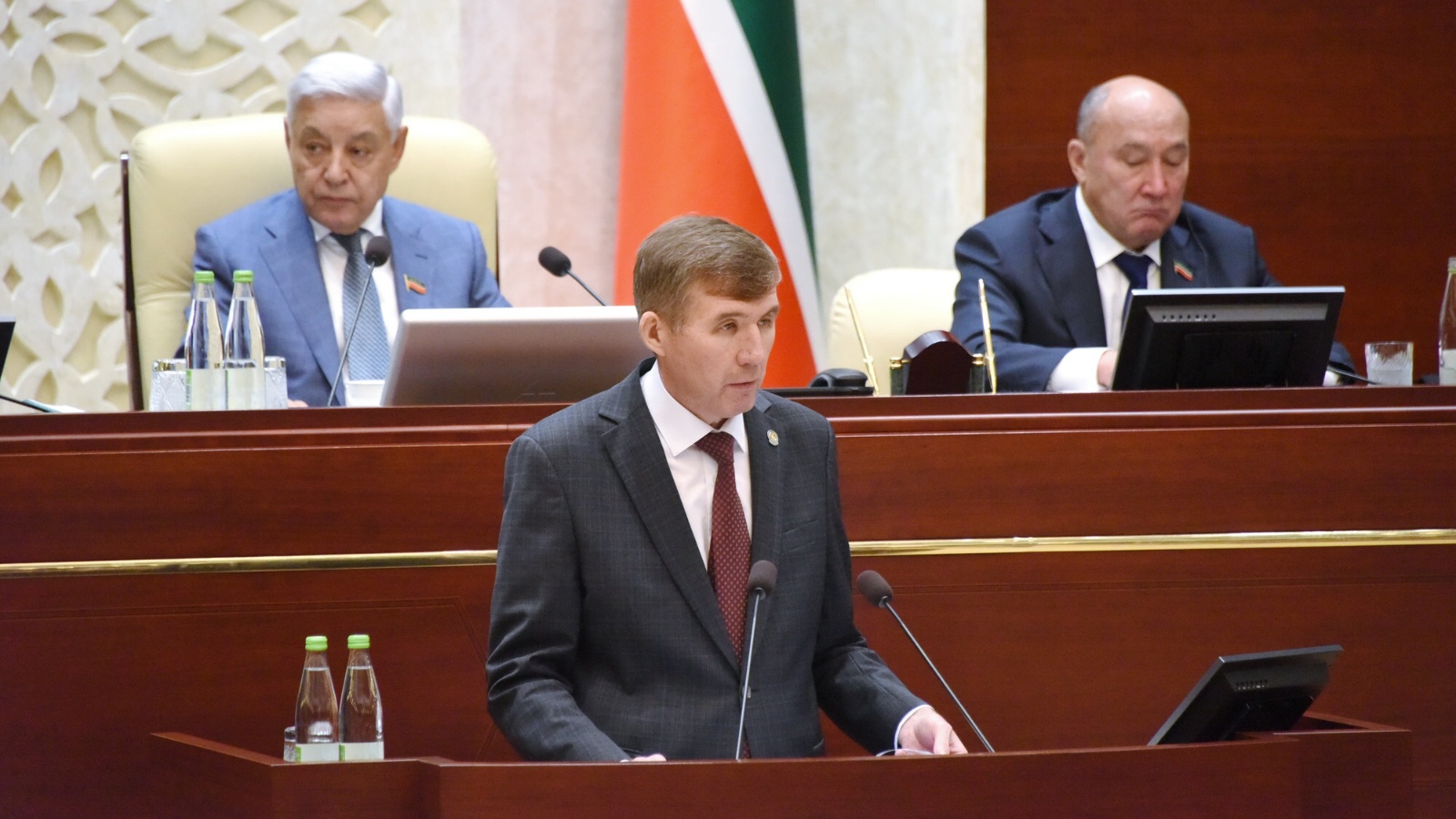
Today, within the framework of the Thirty-fourth meeting of the State Council of the Republic of Tatarstan, a bill was considered on amending the republican law on setting tax rates for taxpayers applying a simplified taxation system, as well as the law on the patent taxation system.
The draft law is supposed to extend the effect of reduced tax rates for taxpayers in cities with a population of up to 7,000 people that use a simplified taxation system. At the same time, the threshold values of income from economic activity should be reduced from at least 90 percent to 70 percent. Preferential tax rates will be available to taxpayers engaged in the development of computer software (OKVED code 62) and activities in the field of information technology until the end of this year (OKVED code 63).
Deputy Prime Minister of the Republic of Tatarstan - Minister of Economy of the Republic of Tatarstan Midkhat Shagiakhmetov noted that the bill is aimed at attracting new companies in the field of information technology from other regions of Russia to Tatarstan, developing small and medium-sized businesses, and increasing the investment attractiveness of the republic as a whole.
“In the context of unprecedented sanctions pressure, support for start-ups is required by maintaining preferential conditions for doing business,” the minister added.
Also at the meeting of the State Council of the Republic of Tatarstan, a draft law on amendments to the republican law on the patent taxation system was considered.
According to the voting results of the deputies of the State Council of the Republic of Tajikistan, the draft law on recognizing paragraph 81 of part 1 of article 2 of the republican law on the introduction of a patent taxation system as invalid was adopted in the first reading and as a whole.
In particular, the list of types of entrepreneurial activity for which the patent system of taxation can be applied has been changed. From January 1, 2023, federal legislation prohibits the application of special tax regimes in the jewelry industry related to precious metals (production and sale of jewelry).
The current list includes the repair of jewelry and bijouterie, embossing and engraving of jewelry, making jewelry and bijouterie on an individual order. Restrictions on the application of special tax regimes in the jewelry industry do not apply only to organizations and individual entrepreneurs engaged in the production of jewelry and jewelry repair. While enterprises for the manufacture of jewelry and similar products on an individual order are excluded from the list.